 Orbivida
Ramesses II statues found in Egypt: size, inscriptions and the Moses claim
Egypt's Ministry of Tourism and Antiquities announced on 14 October 2026 that two colossal statues of Ramesses II had been found in Behbeit El-Hagar, a village in the Nile Delta [s:bernama-ramesses][s:foxnews-ramesses]. The larger head is about 1.6 metres high, and the whole statue may have stood about 8.5 metres [s:bernama-ramesses]. The link to Moses comes from unnamed scholars and is not part of the official findings [s:foxnews-ramesses].
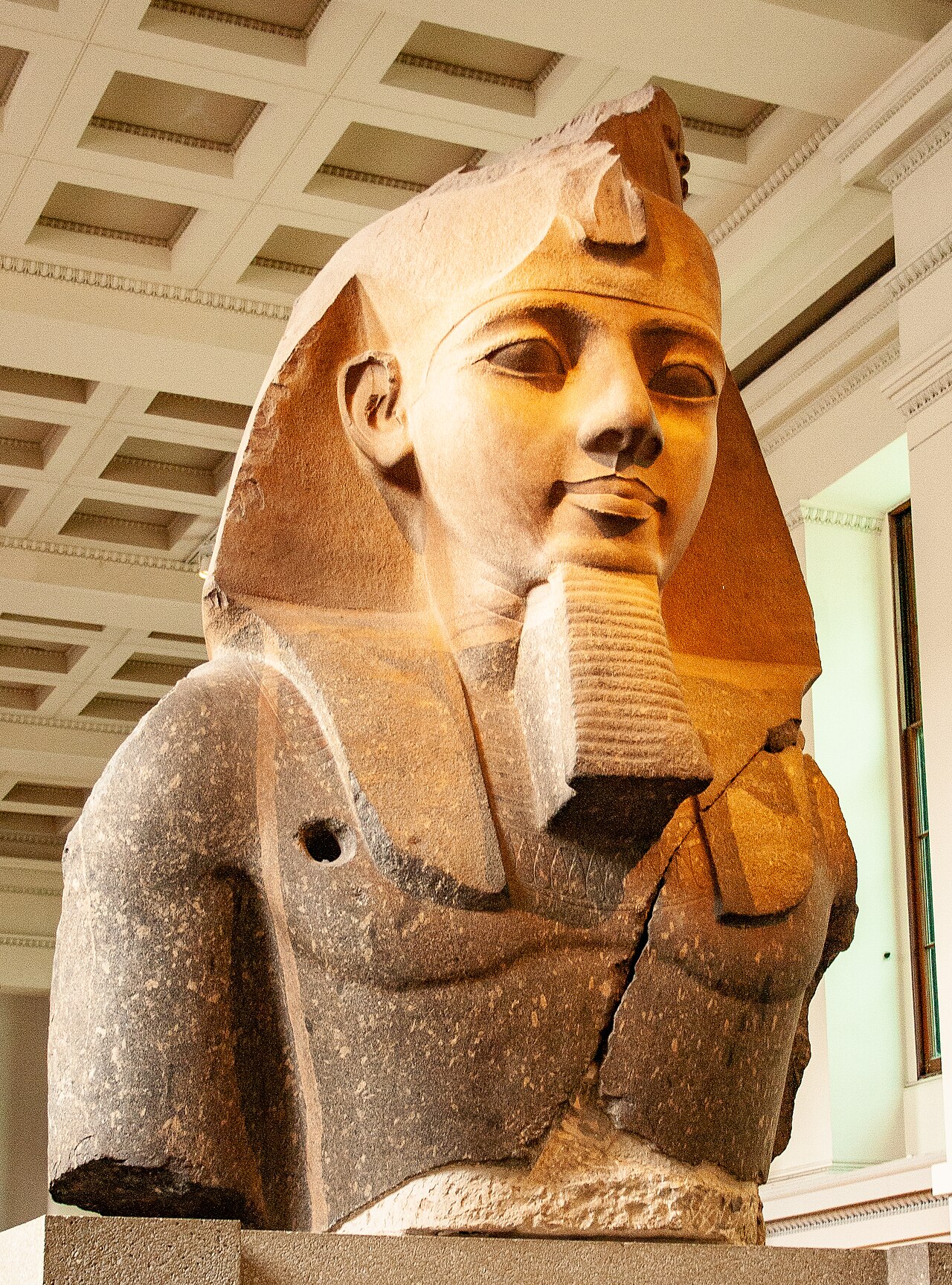

Two colossal statues of Ramesses II have turned up in the Nile Delta, and the story is spreading because one report ties the find to Moses. Egypt's ministry announced the discovery on 14 October, and excavation is still under way [2]. Here is what has been confirmed, what is still open, and where the Moses claim comes from.
What the excavators found
The find began with a farmer. He came across an inscribed stone while working his land and alerted the local authorities, who then excavated the site [1]. Fox News published its report on 28 October and said the finds had been announced "earlier this month" [1].
The larger piece is a head about 1.6 metres high. Estimates put the whole statue, base included, at about 8.5 metres [2]. Fox News gives the same estimate in feet, nearly 28, and describes the head as more than five feet tall [1].
The second statue survives to about 2.4 metres. Its legs and base are missing, but its head is well preserved [1][2]. A separate pink granite block, measuring 1.3 metres, carries hieroglyphs with the king's royal titles [2].
The inscriptions
The inscriptions are the main reason the pieces are linked to Ramesses II. Part of a back pillar carries one of his royal names, the Horus name [1][2]. Two hieroglyphic inscriptions on the block give his titles Nesu-Bity, King of Upper and Lower Egypt, and Sa-Ra, Son of Ra [2].
Those titles name the king. They do not say where the statues originally stood or who ordered them. The ministry says that excavation and study will continue to establish the nature of the finds and how the pieces relate to each other [2]. It also expects the work to shed light on the site's history and architectural development [2].
Where the Moses claim comes from
The Moses angle sits in the framing of the Fox News report, not in the ministry's statement. The article says that unnamed scholars suggest Ramesses II may be the pharaoh of the Book of Exodus [1]. It also says that this identification remains uncertain [1]. The ministry's statement does not mention Moses [1].
For readers who searched for the Moses link, the distinction is simple. The discovery, the location, the sizes and the royal titles are reported facts. The Exodus identification is a hypothesis raised by scholars, and the official line makes no such claim.
What comes next
Excavation is still under way. Three things are worth watching: a firm identification of the second statue, more inscribed blocks from the same site, and a fuller ministry report on how the pieces fit together [2]. Any of these could change the picture quickly. Until then, the safest reading is the simplest one: two royal statues of Ramesses II, found in the Delta and still being studied.
Sources
- Giant statues of pharaoh with Moses link discovered after farmer finds inscribed stone, Fox News (October 28, 2026)
- Egypt Discovers Fragments Of Two Colossal Ramses II Statues, BERNAMA (October 28, 2026)