 Orbivida
Ramesses II statues found in the Nile Delta after a farmer hit an inscribed stone
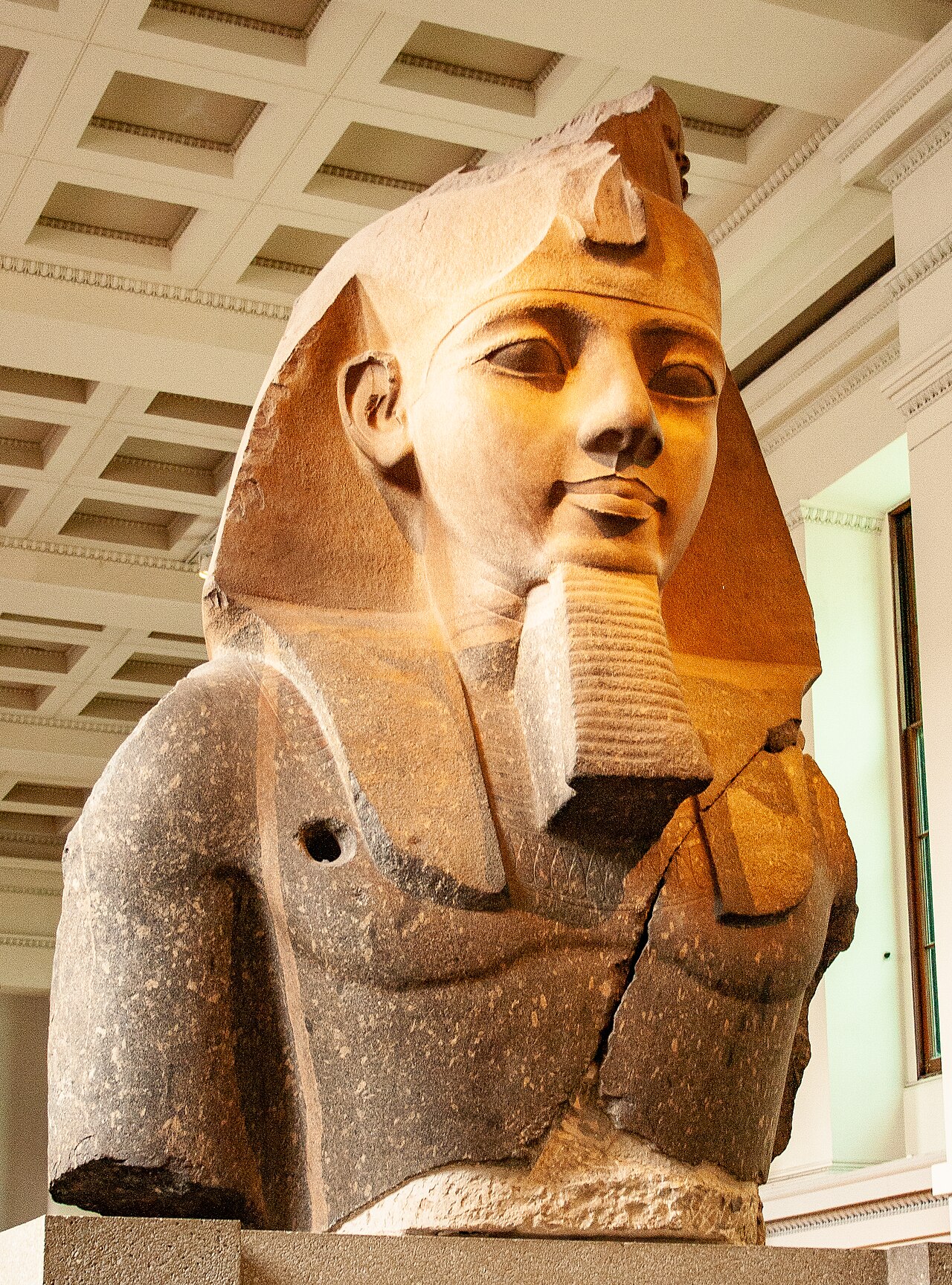
Two colossal royal statues, believed to show Ramesses II, were found at Behbeit El-Hagar in Egypt's Nile Delta after a farmer reported an inscribed granite block [s:foxnews-ramesses-statues] [s:thehistoryblog-ramesses-statues]. The larger head suggests a full statue of about 28 feet, and a link to the biblical Exodus remains a debated idea rather than a finding [s:foxnews-ramesses-statues].

What happened
Egyptian authorities have announced the discovery of two colossal royal statues in the village of Behbeit El-Hagar, in the Gharbia Governorate of the Nile Delta [2] [1]. The find started with a farmer. He was digging on his land and found a pink granite block with hieroglyphic inscriptions, then reported it to local heritage officials [2]. Fox News describes the stone as found in a cucumber greenhouse on his property [1].
Officials then excavated the site, and the two statues came to light. The first is a colossal head about 5.25 feet tall, which wears the double crown. Officials estimate that the full statue, base included, may have stood nearly 28 feet high [1] [2]. The second is a royal head and torso about 8 feet high, which lacks its legs and base. Officials say its face closely resembles the first [1] [2].
The find was not new to officials when the coverage spread. Fox News says the Ministry of Tourism and Antiquities announced it earlier in October 2026 [1], and The History Blog's report is dated 15 October 2026 [2]. Egypt's Supreme Council of Antiquities then arranged an emergency excavation at the site [2]. The late-October headlines are therefore a second wave of attention to a discovery that had already been made public.
Why the king is identified
The identification rests on writing. A fragment of the back pillar carries the Horus name of Ramesses II, and a nearby pink granite block names him as King of Upper and Lower Egypt and Son of Ra [2]. Those inscriptions give archaeologists a firm anchor for the first statue. The second figure is believed to show the same king, although it wears a different headdress [2].
Fox News gives the king's lifespan as about 1303 to 1213 BC [1]. His statues are among the best-known monuments of ancient Egypt, which is part of why a new pair draws wide interest.
The Moses question
The headlines linked the find to Moses, and that is the part many readers searched for. Some scholars have suggested that Ramesses II was the pharaoh who confronted Moses in the Book of Exodus. Fox News notes that this identification remains uncertain, and the Bible does not name the pharaoh [1]. The statues do not prove any biblical event, and the reports make no such claim.
What comes next
Excavations and studies are continuing, according to officials [1]. The open questions are how the two statues fit into the wider site, which is known for an ancient temple dedicated to Isis, and whether further inscriptions turn up around them [1]. Fuller reports from the Egyptian antiquities authorities should settle how the monuments relate to the temple and to each other.
Sources
- Giant statues of pharaoh with Moses link discovered after farmer finds inscribed stone, Fox News (October 28, 2026)
- Nile Delta farmer finds Ramesses II statues, The History Blog (October 28, 2026)